
Where to Stay in Caracas
Your guide to the best areas and accommodation types
Caracas funnels its visitor infrastructure eastward, where drifting coffee aromas from street carts mingle with the green wall of El Ávila mountain framing the northern skyline. Altamira, Las Mercedes, La Castellana, and El Rosal hold every international hotel and nearly every restaurant visitors will encounter. Head west toward Sabana Grande and La Candelaria and you trade amenity density for lower costs and considerably more street caution.
The city prices its better hotels in US dollars, which simplifies budgeting despite the volatile local economy. Budget beds in the center run appreciably cheaper than equivalent quality in Bogotá; the top international brands sit at international rates.
Budget
$30-60 per night for basic hotels and guesthouses in La Candelaria and Sabana Grande
Mid-Range
$80-160 per night for 3-4 star properties and serviced suites in the eastern municipalities
Luxury
$180-380 per night for the international 5-star flagships in El Rosal, La Castellana, and Chuao
Where to Stay in Caracas
Hand-picked hotels across price tiers for every visitor.
Our Top Picks
The highest-rated hotel in each price range, selected from all neighborhoods.
Top Pick: Altamira
Budget
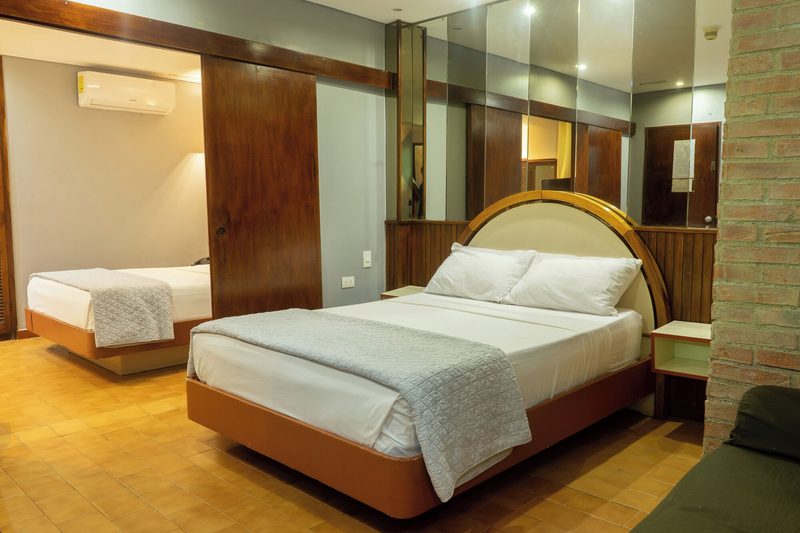
Caracas Vision Hall
"The room booked in a hurry is cheap and good, much better than the old El Arroyo…"
Pool
Parking
Priority airport pick-up
Luggage storage
Altamira
Check prices on Trip.com →
Top Pick: Altamira
Mid Range
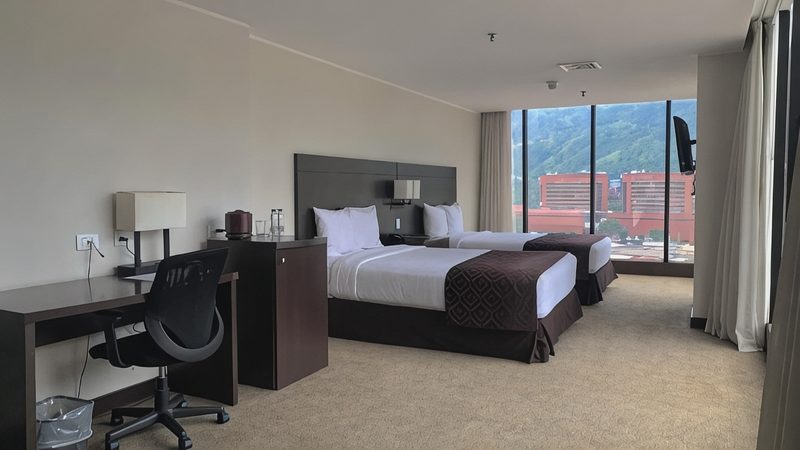
JW Marriott Hotel Caracas
"Very good facility and good breakfast. I'm going to choice next business trip.…"
Outdoor swimming pool
Sauna
Spa
Massage room
Altamira
Check prices on Trip.com →
Top Pick: Altamira
Luxury
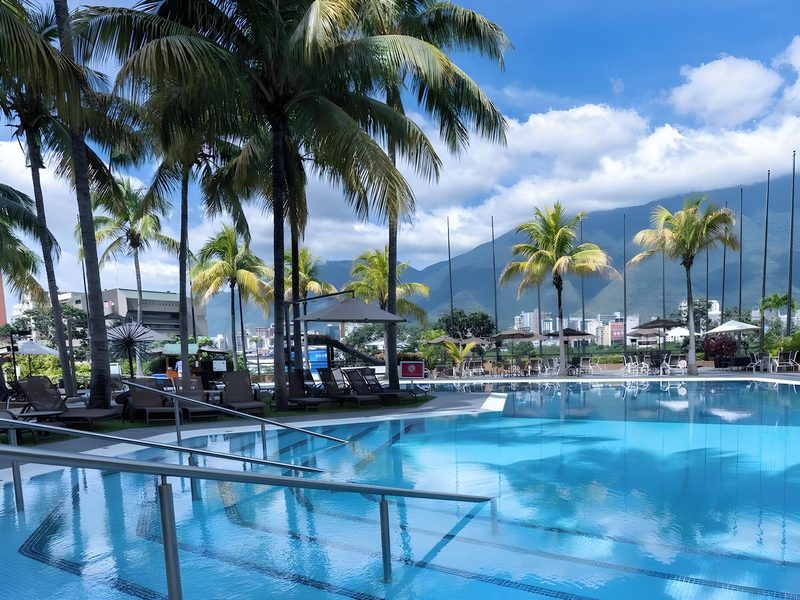
Cayena-Caracas
Outdoor swimming pool
Spa
Massage room
Gym
Altamira
Check prices on Trip.com →
Best Areas to Stay
Each neighborhood has its own character. Find the one that matches your travel style.
Hotel recommendations verified
Altamira
Mid-range to luxury
The social spine of the eastern zone, where café tables line Avenida Luis Roche and espresso scent mingles with tropical jasmine from the plaza gardens. Altamira is the neighborhood visitors return to instinctively: safe enough to walk at night within the main commercial corridor, dense with good restaurants, and anchored by the Francisco de Miranda metro stop.
- ✓ Direct metro access on the Francisco de Miranda line keeps transfers quick and avoids the need for a ride app during daylight
- ✓ The widest selection of mid-range restaurants in the city concentrated within six walkable blocks
- ✓ A visible, regular police presence on the main bou after dark that makes the core feel secure
- ✓ Easy access north to El Ávila national park for morning hikes while the mountain air is still cool and clear
- ✗ Side streets off the main commercial strip require ride-app transport after 21:00
- ✗ Weekend noise from the plaza and surrounding bars carries into nearby hotel rooms until midnight
Recommended places to stay in Altamira
Budget
Caracas Vision Hall
"The room booked in a hurry is cheap and good, much better than the old El Arroyo…"
Pool
Parking
Priority airport pick-up
Luggage storage
✓ Verified
Check prices on Trip.com →
Mid Range
JW Marriott Hotel Caracas
"Very good facility and good breakfast. I'm going to choice next business trip.…"
Outdoor swimming pool
Sauna
Spa
Massage room
✓ Verified
Check prices on Trip.com →
Luxury
Cayena-Caracas
Outdoor swimming pool
Spa
Massage room
Gym
✓ Verified
Check prices on Trip.com →
Budget
Las Americas
Conference room
Business center
Wi-Fi in public areas
✓ Verified
Check prices on Trip.com →
Mid Range
Lidotel Caracas
"Мне отель понравился.Персонал вежливый и доброжелательный, просторные комфортны…"
Sauna
Spa
Massage room
Gym
✓ Verified
Check prices on Trip.com →
Las Mercedes
Mid-range to luxury
The entertainment district of eastern Caracas, where the hiss of a hot parrilla grill and the thrum of bass from open-fronted bars fills the warm evening air. Las Mercedes runs along a compact grid that stays active well after midnight on weekends. Chimichurri and charcoal smoke drift through streets lined with outdoor terraces and brightly lit restaurant fronts.
- ✓ The densest restaurant and bar scene in the city within a walkable grid of streets
- ✓ Good ride-app availability throughout the night, with drivers familiar with the district
- ✓ Close to the major shopping centers of the eastern zone, including El Recreo and El Tolón
- ✓ The Tamanaco InterContinental grounds provide a large, landscaped perimeter that sets an anchor of calm
- ✗ Street noise and late-night activity make this a poor choice for early risers or light sleepers
- ✗ InDriver and Beat can bottleneck Friday and Saturday nights as the restaurant strip empties at once
Recommended places to stay in Las Mercedes
Budget
Hotel El Arroyo
"The hotel is good. There were no problems. The location is good. The staff is po…"
Luggage storage
Bar
Restaurant
Cafe
✓ Verified
Check prices on Trip.com →
Mid Range
Eurobuilding Hotel & Suites Caracas
"Spacious Room. Excellent Breakfast. Nice Gym. Good Location"
Outdoor swimming pool
Sauna
Spa
Massage room
✓ Verified
Check prices on Trip.com →
Mid Range
Renaissance Caracas la Castellana Hotel
"Good Hotel Excellent Breakfast Good Spacious Room"
Outdoor swimming pool
Sauna
Spa
Massage room
✓ Verified
Check prices on Trip.com →
"Excellent hotel, good attention comfortable room and well located"
Outdoor swimming pool
Sauna
Gym
Public parking
✓ Verified
Check prices on Trip.com →
Mid Range
The Hotel
"Recommended hotel. Very good breakfast. Excellent location."
✓ Verified
Check prices on Trip.com →
La Castellana
Luxury
Quiet, residential, and polished, La Castellana fills the gap between Altamira's café culture and the business formality of El Rosal. Tree-lined streets carry cool evening breezes through gated buildings and the neighborhood's few restaurants cater to diplomats, executives, and resident expats rather than tourist crowds. The Renaissance hotel anchors the district with an operational standard that sets the tone for the entire enclave.
- ✓ The quietest and most residential feel of any eastern-zone neighborhood, with mature trees muffling street noise
- ✓ The Renaissance maintains standards that outperform most of its Caracas chain-hotel peers on consistency
- ✓ Walking distance to the key business addresses of El Rosal and the Chacao metro interchange
- ✓ Considerably less weekend noise than Altamira or Las Mercedes despite being equally close to both
- ✗ Restaurant and entertainment options are sparse by eastern-zone standards. Most evenings require a ride app
- ✗ The premium location commands premium rates. Budget travelers find far better value in Altamira two minutes away by taxi
Recommended places to stay in La Castellana
Mid Range
Hotel Altamira Suites
"All right, the unique disadvantage was that the air conditioning was failing eve…"
Outdoor swimming pool
Sauna
Spa
Massage room
✓ Verified
Check prices on Trip.com →
Mid Range
Hotel Chacao Cumberland
"The hotel is cost-effective and has good service. But it is best to know English…"
Gym
Airport pick-up
Luggage storage
Restaurant
✓ Verified
Check prices on Trip.com →
Mid Range
Hotel CCT Caracas
Golf course
Outdoor swimming pool
Spa
Gym
✓ Verified
Check prices on Trip.com →
Mid Range
Melia Caracas
"This is a top hotel and everthing was awesome!"
Outdoor swimming pool
Sauna
Spa
Gym
✓ Verified
Check prices on Trip.com →
El Rosal
Luxury
El Rosal keeps the eastern Caracas economy alive. Generators roar. Climate-control units hiss. Bank towers and corporate headquarters stay online through every city-wide outage. Morning light bounces off glass façades and the cloud-draped Ávila peak. This is a business neighborhood first. Streets stay orderly. Private security patrols around the clock.
- ✓ Among the most actively patrolled blocks in the city, given the banking and embassy concentration along Avenida Venezuela
- ✓ Walking distance to the Chacao metro and the major commercial malls of the eastern zone
- ✓ The JW Marriott sits directly in this corridor with the most complete amenity set of any hotel in Caracas
- ✓ Quiet and empty after business hours, which translates to near-silent hotel rooms on weekday evenings
- ✗ Deserted after business hours. Dining options close early and the neighborhood loses its energy entirely by 20:00
- ✗ No residential character. The atmosphere is functional rather than atmospheric, and evenings feel hollow
Recommended places to stay in El Rosal
Budget
Hotel El Arroyo
"The hotel is very comfortable and very comfortable. Maybe investing in sound i…"
Wi-Fi in public areas
✓ Verified
Check prices on Trip.com →
Mid Range
Hotel Tamanaco Caracas
"Very clean and excellent service"
Outdoor swimming pool
Hiking
Casino
Private parking
✓ Verified
Check prices on Trip.com →
Mid Range
Altamira Village Hotel & Suites
✓ Verified
Check prices on Trip.com →
Budget
Hotel Caracas Cumberland
"Helpful staff, I was able to extend the checkout time by paying extra"
Golf course
Luggage storage
Currency exchange
Wi-Fi in public areas
✓ Verified
Check prices on Trip.com →
Budget
Hotel Las Quince Letras
✓ Verified
Check prices on Trip.com →
Los Palos Grandes
Mid-range
Los Palos Grandes grew its café culture slowly. Two decades later it hosts the city's best concentration of specialty coffee shops, independent bookstores, and slow-lunch restaurants. Wide pavements and mature shade trees soften the capital's edge. The rich smell of dark-roasted coffee drifts from open shopfronts. Cool mornings bring a faint floral note from garden walls. Tranquility is rare in Caracas. Here it lingers.
- ✓ The gentlest pedestrian environment in the eastern zone, with wide pavements under mature shade trees that block the afternoon heat
- ✓ An independent coffee culture largely absent from the other eastern neighborhoods, with roasters and specialty cafés on nearly every block
- ✓ Accommodation rates run below equivalent quality in Altamira and La Castellana by a noticeable margin
- ✓ Quick InDriver connection to Altamira metro and the main eastern commercial strip
- ✗ No metro station in the neighborhood itself. Every trip to the city center requires a short taxi or ride-app hop
- ✗ The boutique accommodation stock is thin, and most visitors who want a full-service hotel default to nearby Altamira properties
Recommended places to stay in Los Palos Grandes
Prados del Este
Mid-range
Prados del Este sits on the southeastern flank of the valley. Altitude lifts it above the heat. Cooler evenings arrive scented with eucalyptus drifting from hillside parks. The neighborhood is almost entirely residential. Tourists rarely appear. It feels like a prosperous Latin American suburb, not a capital-city barrio.
- ✓ Cooler temperatures than the valley floor make for comfortable sleeping without heavy air conditioning on most nights
- ✓ Very low street crime relative to even the safer eastern municipalities, with a calm residential atmosphere
- ✓ Several well-maintained serviced apartment buildings offer full kitchens, laundry, and pool access
- ✓ Quick highway access to the Santa Fe business cluster and Simón Bolívar International Airport
- ✗ Essentially no walkable nightlife or restaurant scene. Every meal beyond the apartment kitchen requires a ride
- ✗ The least metro-connected neighborhood on this list; InDriver is the only practical link to the center
Recommended places to stay in Prados del Este
El Hatillo
Budget-friendly to mid-range
Twenty kilometers southeast of the city center, El Hatillo is a colonial village absorbed by Greater Caracas. It still keeps its whitewashed church, cobbled plaza, and the smell of woodsmoke from artisan workshops. Bright ochre and terracotta façades line streets selling ceramics, textiles, and locally made chocolate. Altitude keeps the air cool. Evenings carry a real chill. Life moves at a pace the valley below has forgotten.
- ✓ The only colonial streetscape accessible from Caracas, with texture and saturated color absent from the eastern-zone glass towers
- ✓ Cooler, cleaner air than the valley floor due to the higher elevation. The evenings carry a real chill
- ✓ Family-run restaurants serving traditional Venezuelan food at prices well below city-center equivalents
- ✓ The cobbled streets in daylight are safe and pleasant to walk without the heightened awareness the city requires
- ✗ The 40-minute journey to the eastern business zone makes it impractical for visitors with daily city-center meetings. Factor in traffic and you lose two hours daily. Stay closer instead.
- ✗ Late-night transport back from the city requires a pre-booked InDriver. Spontaneous returns after midnight are not advisable from here. Lock in your ride early.
Recommended places to stay in El Hatillo
La Candelaria
Budget-friendly
The historic European immigrant quarter carries the smell of espresso from Spanish social clubs. Dominoes slap on café tables that Canarian and Portuguese communities installed a century ago. Broad avenues connect a dense grid of mid-century buildings and local lunch counters that still serve unchanged menus. La Candelaria offers the most authentically historic character in central Caracas. It requires more street-awareness than the eastern zone.
- ✓ The cheapest hotel rates accessible from the metro system anywhere in non-western Caracas. Budget travelers take note. Savings add up fast.
- ✓ Dense with inexpensive local restaurants serving traditional Venezuelan and Spanish Canarian food. Prices feel notable by capital-city standards. Eat like a local for less.
- ✓ Strong historical character that the modern glass towers of the eastern municipalities entirely lack. Stone and stories here. Steel and shine there.
- ✓ The Plaza La Candelaria market fills the morning air with the smell of fresh arepas and roasted corn. Follow your nose. Arrive hungry.
- ✗ After-dark street security requires considerably more caution than the eastern zone. Walking alone at night outside the immediate hotel block is inadvisable. Take a taxi.
- ✗ Power cuts are more frequent here. Generator backup in smaller properties is less reliable than in the eastern municipalities. Charge devices early.
Recommended places to stay in La Candelaria
mid_range
Gran Hotel Caracas
Sabana Grande
Budget-friendly
The pedestrianized boulevard of Sabana Grande was once Caracas's elegant shopping promenade. Today it is a dense, loud, and relentlessly alive commercial strip where vendors sell phone cases beside arepas de pabellón under the glare of fluorescent storefronts. The smell of exhaust, fried food, and tropical rain on hot asphalt is the sensory signature of this neighborhood. It offers the cheapest accommodation in the eastern half of the city.
- ✓ The lowest accommodation rates of any neighborhood in the non-western city. Multiple options clustered around the Bellas Artes metro. Bargain central.
- ✓ Twenty-four-hour commercial activity means food and basic supplies are always within a short walk. Night owl friendly. Convenience defined.
- ✓ Bellas Artes metro station connects directly to both the eastern business zone and the historic center. One card, two worlds. Easy transfers.
- ✓ Proximity to the Teresa Carreño Cultural Complex for concert and theater events
- ✗ The highest bag-theft and petty-crime exposure of any neighborhood on this list. The boulevard demands constant vigilance. Watch your pockets.
- ✗ Hotel quality varies sharply. Prior guest reviews should be read carefully before committing to a booking. Do your homework.
Recommended places to stay in Sabana Grande
Chacao
Luxury
The administrative and commercial heart of the eastern municipality cluster links Altamira, El Rosal, and Las Mercedes. It holds the main Chacao metro interchange. Glass towers and shopping centers line its main corridors. The Mercado de Chacao fills weekend mornings with the smell of freshly cut tropical fruit, sizzling empanadas, and the sound of cumbia from the produce stalls.
- ✓ The best metro connectivity in the eastern zone. Direct lines to the historic center, the university city, and the Altamira interchange. Move fast.
- ✓ Walking distance to major malls including Centro San Ignacio and Centro Comercial El Recreo. Shop till you drop. Then drop nearby.
- ✓ Well-lit and well-patrolled main commercial streets at all hours of the day and into the evening. Feel safer here. Walk freely.
- ✓ The weekly Mercado de Chacao is one of the most sensory-rich morning experiences in the city. Produce stalls stretching an entire block. Colors, smells, rhythms.
- ✗ Hotel rates reflect the premium central location. Budget travelers find substantially better value in adjacent Altamira. Save money. Walk ten minutes.
- ✗ Traffic noise on the Autopista Francisco Fajardo creates a persistent hum along the main hotel corridors. Pack earplugs. Sleep tight.
Recommended places to stay in Chacao
Find Hotels in Caracas
Compare prices and book your perfect stay
Find the best hotel for your stay on Trip.comPrices via Trip.com. We may earn a commission from bookings.
Accommodation Types
From budget-friendly hostels to luxury hotels, here's what's available.
International Chain Hotels
$180-380 per night
Marriott, Meliá, and InterContinental flagships concentrate in the eastern municipalities and set the reliability standard for Caracas.
Best for: Business travelers and international visitors who require 24-hour generator backup, multilingual staff, and brand-standard amenities
Rates at international chains in Caracas are priced in US dollars and are typically firm. Direct booking through the a comparison site occasionally unlocks complimentary breakfast not available through OTAs
Serviced Apartments
$80-150 per night
Extended-stay buildings in Altamira, Chacao, and Prados del Este offer full kitchens and larger rooms at substantially lower rates than full-service Caracas hotels.
Best for: Relocating professionals, long-stay business visitors, and families who need self-catering facilities
Negotiate monthly rates directly with the property manager. Savings over nightly rates are substantial for stays beyond two weeks
Colonial Posadas
$30-70 per night
Family-run guesthouses in El Hatillo occupy restored colonial houses with courtyard gardens and home-cooked breakfasts.
Best for: Couples and independent travelers seeking character accommodation in the cooler, quieter southeastern suburbs
Many posadas are not listed on international booking platforms; a direct WhatsApp message to the property typically secures a reservation faster than any third-party site
Budget City Hotels
$30-60 per night
La Candelaria and Sabana Grande hold the most affordable options in Caracas, from spartan clean rooms to renovated mid-century properties.
Best for: Backpackers and budget travelers who prioritize metro access and low costs over the safety margins of the eastern zone
Rack rates at smaller Caracas hotels are frequently negotiable when paying cash in US dollars. Always inspect the room before handing over payment
Booking Tips
Insider advice to help you find the best accommodation.
Pay in US dollars
Virtually all Caracas hotels now price and accept payment in US dollars. Carrying small-denomination bills is practical, as change offered in bolívares may come at unfavorable rates. Some properties also accept euros at a negotiated daily rate.
Book eastern Caracas six weeks ahead for Carnival
Altamira, Las Mercedes, and La Castellana hotels fill six to eight weeks before Carnival in February and Semana Santa in April. Outside those windows, two weeks of lead time is sufficient for mid-range properties and serviced suites.
Use ride apps for all night transfers
Arrivals and departures are safest when booked through InDriver or Beat, the two main ride apps operating in Caracas. Confirm the licence plate before entering the vehicle. Airport transfers from Simón Bolívar International in Maiquetía take 45 to 60 minutes depending on traffic and should be arranged in advance through the hotel concierge.
Confirm generator backup before booking
Power outages remain a regular occurrence across Caracas. All international chain hotels and the better serviced-apartment buildings in the eastern municipalities maintain 24-hour generator backup. Smaller budget hotels and posadas typically do not, which affects air conditioning, hot water, and Wi-Fi reliability during cuts.
When to Book
Timing matters for both price and availability.
High Season
Reserve six to eight weeks ahead for Carnival in February and Semana Santa in April, when eastern Caracas hotels fill across all tiers and rates climb to their yearly peaks.
Shoulder Season
May and October offer the city at its quietest, with rates 20 to 30 percent below peak and El Ávila mountain at its deepest green after the first rains. Two weeks of lead time secures any property.
Low Season
June through September is the rainy season. Afternoon thunderstorms clear quickly and the valley air turns cool and clean in the evenings. Hotels sit near half-capacity and nightly rates are negotiable.
Two weeks ahead covers most eastern Caracas hotels for the majority of the year. Allow six weeks for Carnival and Semana Santa; El Hatillo posadas can typically be arranged a few days in advance year-round.
Good to Know
Local customs and practical information.
Check-in / Check-out
Standard check-in is 14:00 and check-out is 12:00. The larger hotels hold luggage securely if you arrive on an early morning flight from Maiquetían airport.
Tipping
A small tip in US dollars per night for housekeeping is warmly received and impactful given local wages. Porters at international hotels expect a modest amount per bag.
Payment
US dollars dominate across Caracas. Major international hotels accept Visa and Mastercard. Smaller hotels and posadas prefer cash. Keep small US dollar bills for tips, taxis, and street food vendors.
Safety
Caracas demands more street-awareness than most Latin American capitals. Confine evening movement to the eastern municipalities: Altamira, Las Mercedes, La Castellana, and Chacao. Use hotel-arranged or app-booked transport after dark. The metro is not advisable at night.
Ready to plan your trip to Caracas?
Now that you've got the research covered, here's where to go next.